

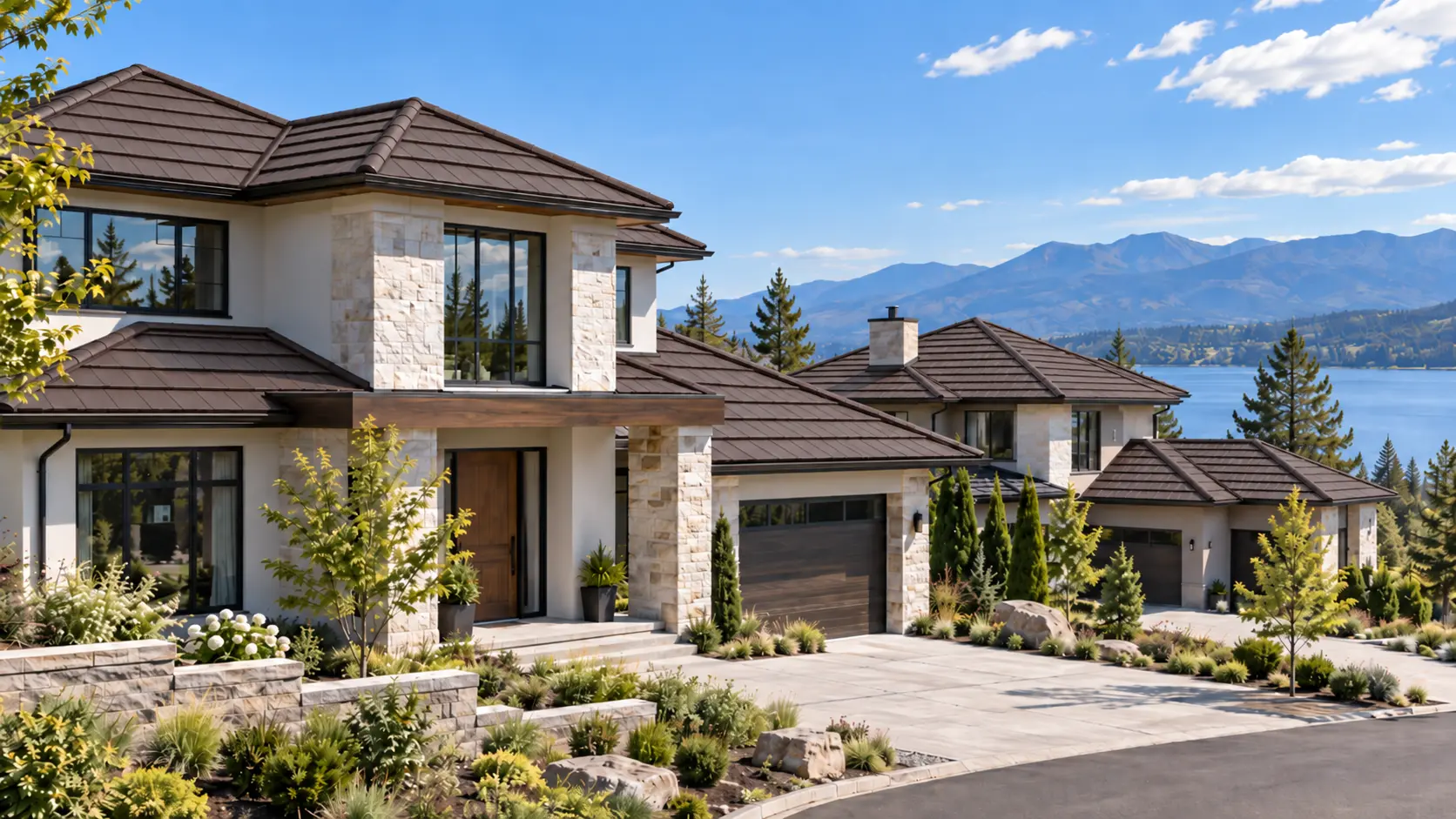
Choosing between a metal roof and asphalt shingles is one of the biggest decisions a homeowner makes when it is time to replace or install a new roof. Both materials can perform well when they are properly installed and matched to the home, climate, and local building requirements.
For most homeowners, the choice between a metal roof vs. shingles comes down to several factors: upfront budget, expected lifespan, local weather, maintenance requirements, appearance, and how long they plan to stay in the home.
This guide compares metal roofing vs. asphalt shingles across cost, durability, weather performance, maintenance, energy efficiency, installation, and design options.
Specific performance ratings vary by product, roof assembly, installation method, and local conditions. Product approvals and technical documentation should always be reviewed before choosing a roofing system.
Metal Roof vs. Asphalt Shingles at a Glance
What Are Asphalt Shingles?
Asphalt shingle roofing is typically built from a fiberglass mat coated with asphalt and finished with mineral granules. It remains one of the most common residential roofing materials in the U.S. because it is widely available, familiar to contractors, and generally less expensive to install than metal roofing.
Three-tab and architectural, or dimensional, shingles both fall into this category. Architectural shingles are heavier and can offer different durability and wind-performance characteristics depending on the product.
The main advantages of an asphalt shingle roof are its relatively low upfront cost, familiar residential appearance, and large installer base. Over time, however, shingles can experience granule loss, curling, cracking, storm damage, and other forms of weather-related aging.
What Is Metal Roofing?
Metal roofing is not a single roofing product. It includes several different systems and profiles, such as:
- Standing seam panels — vertical-seam systems commonly used on contemporary and modern homes.
- Metal shingles — smaller interlocking panels designed to provide a more traditional roof appearance.
- Modular metal roofing — panel-based systems manufactured in sections rather than long continuous sheets.
- Stone-coated steel roofing — steel panels finished with a stone-chip surface that can resemble tile, slate, shake, or other traditional roofing profiles.
Because of this variety, today's metal roofs are not limited to the industrial or corrugated appearance often associated with older metal roofing. A modern metal roof vs. shingle roof comparison can involve two systems that both fit traditional residential architecture.
Metal Roofing vs. Asphalt Shingles: Key Differences
Cost
Asphalt shingles generally have a lower upfront installation cost than metal roofing. However, the actual price difference varies considerably depending on the type of metal system, roof size and complexity, location, tear-off requirements, labor rates, and other installation factors.
Long-term cost is also worth considering. A higher initial investment in metal roofing may be offset over time by a longer service life, fewer full roof replacements, and potentially lower maintenance requirements.
Asphalt shingles may still be the more practical choice when minimizing initial roofing cost is the main priority.
Lifespan and Durability
Asphalt shingle roofs commonly remain in service for roughly a few decades, although their actual lifespan can vary significantly depending on shingle quality, climate, ventilation, installation, and maintenance.
Properly installed metal roofing systems can often remain in service for several decades and may reduce the likelihood of needing multiple full roof replacements over the ownership period of a home.
Novatik steel roofing systems are supported by product-specific warranty coverage. However, a warranty period should not be interpreted as a guaranteed service life. Actual roof performance depends on the complete roofing system, local conditions, and installation quality.
Wind, Hail and Severe Weather Performance
Wind and impact resistance depend on the specific roofing system, tested product ratings, fastening method, roof geometry, and installation — not simply whether the roof is metal or asphalt.
Both roofing categories include products designed for higher wind conditions. Metal roofing systems can also be tested to high wind-load requirements, while asphalt shingles are available with different manufacturer wind ratings.
For hail resistance, homeowners should look at the specific product's impact-testing results rather than assuming that every metal roof or every asphalt shingle performs the same way.
UL 2218 is commonly used to evaluate impact resistance, with Class 4 representing the highest classification within that test.
Novatik NATURA roofing panels are covered by a Miami-Dade County Notice of Acceptance (NOA) for use under the approved system specifications, including requirements applicable to Florida’s High Velocity Hurricane Zone. The approval applies to specific products, assemblies, and installation configurations rather than metal roofing as a whole.
For a deeper look at storm-focused roofing systems, see our guide to the best roof for hurricanes.
Fire Resistance
Both asphalt shingles and metal roofing systems can be part of assemblies with a Class A fire rating.
The important distinction is that fire classification applies to the complete roof assembly, including the roof covering, underlayment, deck, and other components. Homeowners should therefore review the tested assembly rating rather than assuming that one surface material is automatically safer than another.
Energy Efficiency
Metal roofing can provide high solar reflectance when paired with appropriate colors and reflective finishes. Roof color, coating technology, ventilation, insulation, and overall roof design all influence how much solar heat enters the building.
Asphalt shingles also vary in thermal performance depending on color and product design.
For this reason, roofing material alone should not be used to predict a fixed percentage of energy savings. The complete building envelope and attic system play an important role in energy performance.
Maintenance and Repairs
Asphalt shingles can develop granule loss, curling, cracking, algae staining, or storm-related damage as they age. Individual shingles may need to be replaced after severe weather, and older roofs can require increasingly frequent repair.
Metal roofing generally requires periodic inspection of panels, flashings, fasteners where applicable, sealants, drainage areas, and protective finishes.
Maintenance requirements vary by metal roofing system. If a panel is damaged, repairs may also be more specialized than replacing individual asphalt shingles.
Installation
Asphalt shingle installation is familiar to a large number of residential roofing contractors and is generally straightforward for experienced installers.
Metal roofing often requires more specialized installation knowledge. Panel alignment, fastening patterns, flashing, penetrations, roof transitions, and manufacturer-specific installation requirements can all affect long-term performance.
For metal shingles, modular metal roofing, and stone-coated steel systems, it is important to use a contractor familiar with the specific roofing product rather than assuming that every roofing contractor installs every metal system in the same way.
Appearance and Design Options
Asphalt shingles are available in many colors, textures, and dimensional styles, making them easy to match with a wide range of American residential architecture.
Modern metal roofing offers considerably more design flexibility than the traditional standing-seam look alone.
Depending on the system, homeowners can choose from:
- standing seam profiles;
- metal shingles;
- tile-inspired panels;
- slate-inspired profiles;
- wood- or shake-inspired profiles;
- stone-coated steel designs.
This allows homeowners to consider the performance characteristics of metal roofing without necessarily giving up a traditional residential appearance.
Stone-Coated Steel Roofing vs. Asphalt Shingles
Stone-coated steel roofing combines a steel panel structure with a textured stone-chip surface designed to create an appearance closer to traditional roofing materials such as tile, slate, shake, or shingles.
Compared with conventional asphalt shingles, stone-coated steel differs in its construction, fastening system, expected service life, maintenance requirements, and tested weather-performance characteristics.
It can be particularly relevant for homeowners who want the structural characteristics of a steel roofing system but prefer a more dimensional, traditional roof appearance instead of standing seam.
Novatik stone-coated steel systems combine formed steel panels with a stone-coated finish and are available in profiles designed to complement different residential architectural styles.
Are Metal Roofs Better Than Shingles?
Metal roofing is not automatically better for every home.
Asphalt shingles can be a practical choice for homeowners who prioritize a lower upfront cost, want a familiar roofing material, or do not expect to remain in the property long enough to benefit from the longer service life of a metal system.
Metal roofing may be more attractive for homeowners who prioritize longevity, reduced replacement frequency, weather-performance options, lower long-term maintenance, and a roofing system designed for multi-decade ownership.
The better option therefore depends on the priorities of the homeowner rather than the roofing material alone.
How to Choose Between a Metal Roof and Shingles
Start with your budget, but do not evaluate the roof only by installation price.
Consider how long you expect to own the property, your local wind and hail exposure, coastal conditions if applicable, maintenance expectations, architectural style, HOA requirements, local building codes, and the tested ratings of the specific roofing system.
If upfront affordability is the primary concern, asphalt shingles may be the more accessible option.
If long-term service life, storm performance, reduced replacement frequency, or specific architectural options carry more weight, a metal or stone-coated steel roofing system may justify the higher initial investment.
Conclusion
Metal roofing and asphalt shingles can both be appropriate residential roofing materials, but they serve different homeowner priorities.
Asphalt shingles generally provide a lower initial cost and a familiar residential appearance. Metal roofing typically requires a larger upfront investment but can offer a longer service life, lower replacement frequency, broad design flexibility, and access to roofing systems engineered for demanding weather conditions.
For homeowners considering metal without the traditional standing-seam appearance, Novatik offers both stone-coated steel roofing and painted modular metal roofing systems designed for residential applications.