

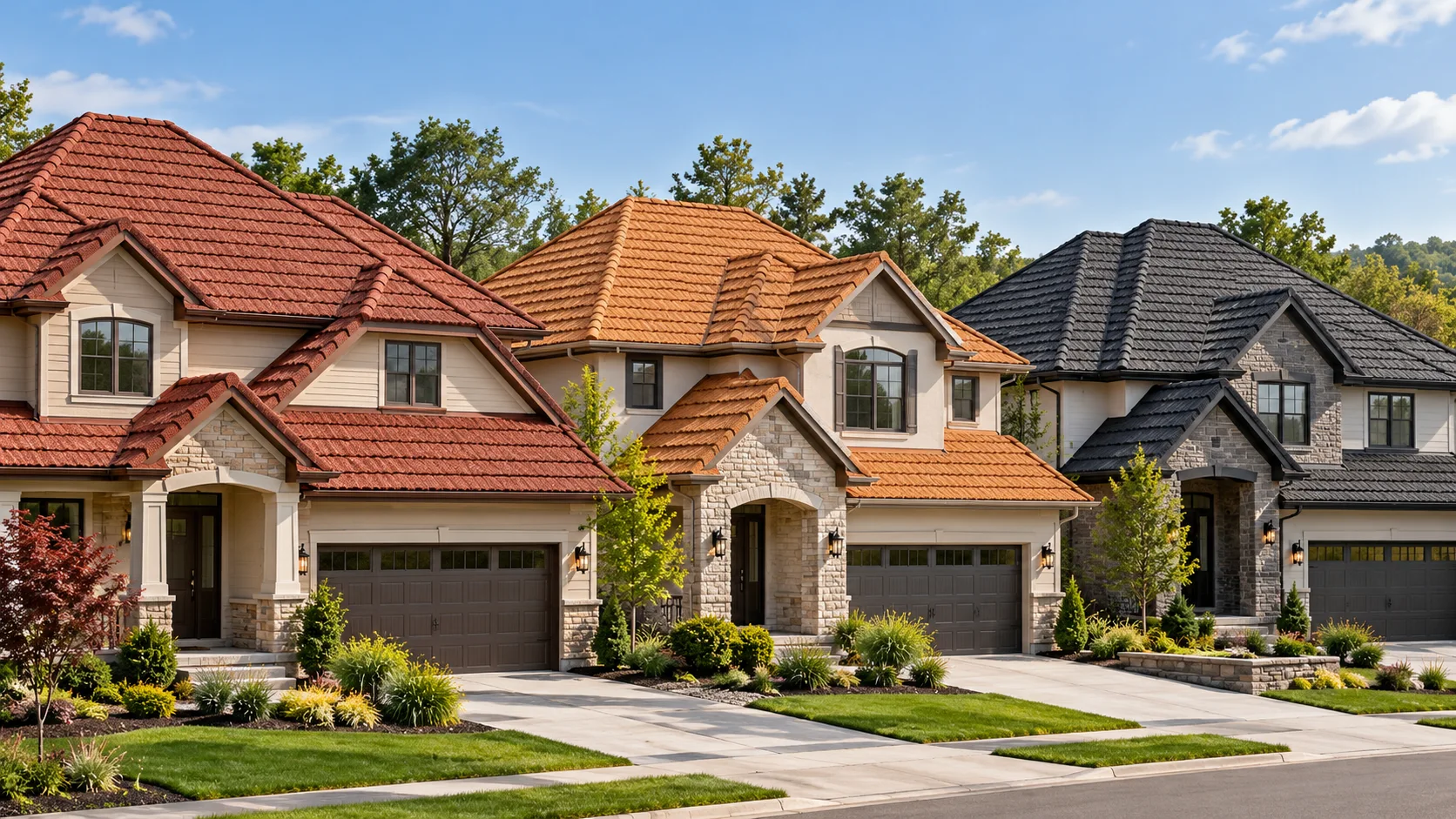
A roof covers a large share of what people see when they look at your house, so its color shapes the entire exterior. Pick well, and the siding, trim, and stonework look intentional. Pick poorly, and even a brand-new roof can feel out of place for years.
With so many roofing color options available, the challenge isn't finding an attractive shade. It's choosing one that works with your home's architecture, existing materials, and local climate.
This guide explores popular roof colors, practical ways to match them with different exteriors, and the factors worth considering before making a final decision.
Why Does Roof Color Matter?
Roof color plays a major role in curb appeal. A charcoal roof over white siding creates a crisp, modern contrast, while a warm brown roof over tan stucco gives a home a softer, more traditional appearance.
Because the roof occupies such a prominent part of the exterior, its color can either bring different design elements together or make them feel disconnected.
Color may also influence how potential buyers perceive a property. A roof that complements the home's architecture and surrounding neighborhood can contribute to an attractive, well-maintained appearance. However, no particular color guarantees a higher resale value.
There are practical considerations, too. Darker roofing surfaces generally absorb more sunlight, while lighter surfaces tend to reflect more.
According to the U.S. Department of Energy, roof temperatures are influenced by solar reflectance and thermal emittance, two properties that affect how a roofing surface responds to solar heat.
These factors make roof color worth considering from both a design and performance perspective.
Popular Roof Color Options for Different Homes
Roofing colors range from classic neutrals to warmer earth tones and distinctive architectural shades. Each creates a different visual effect, especially when combined with the shape and texture of the roofing material.
Black and Dark Gray Roofs
Black, charcoal, and dark gray are versatile choices for both contemporary and traditional homes. They create definition along the roofline and contrast particularly well with white, light gray, and pale blue siding.
These shades are popular in modern farmhouse designs, contemporary architecture, and traditional Colonial-style homes.
Dark gray is often a practical design choice for homeowners who want a strong contrast without the intensity of solid black.
For example, a slate-inspired roofing profile in charcoal can provide a more understated appearance than a highly textured or curved tile design in the same color.
Brown and Earth-Tone Roofs
Brown roofing colors create a warm, established appearance that works especially well with Craftsman, ranch, rustic, and traditional homes.
Chocolate brown, medium brown, and natural earth tones complement wood accents, stonework, tan brick, and warm-colored siding.
The undertone is important. A warm brown roof generally works better with cream, beige, or tan exteriors than with cool blue-gray siding.
Stone-coated roofing materials can add visual depth to these colors through their textured surfaces, making them worth considering for homes with natural exterior finishes.
Red and Terracotta Roofs
Red and terracotta roofing colors are closely associated with Mediterranean, Spanish Revival, and Mission-style architecture.
Their warm appearance works particularly well with white, cream, sand, and pale yellow stucco. They can also complement decorative stonework, arched windows, and traditional exterior details.
For homeowners who prefer the appearance of clay tile, Novatik Nature Roman offers a curved, Mediterranean-inspired profile made from stone-coated steel. Available shades include Terra Rossa, Sand, and Brown Earth, allowing homeowners to explore traditional roof designs in different warm tones.
Light Gray and Silver Roofs
Light gray and silver roofing colors create a softer appearance than charcoal or black. They work well with contemporary homes, coastal-inspired architecture, and light-colored exterior finishes.
These colors can complement white, soft blue, and muted green siding, particularly when darker trim or window frames provide contrast.
Light gray roofs can also be useful for homeowners who prefer a restrained, neutral color palette.
However, the exact shade matters. A pale gray roof against similarly colored siding may create a flat appearance unless the design includes contrasting architectural details.
Other Roof Color Ideas
Not every home needs a traditional gray, black, brown, or terracotta roof.
Muted greens can work with natural wood and wooded surroundings, while blue roofing may complement selected coastal or contemporary designs. Sand-colored finishes can provide a subtle alternative for homes with warm stucco exteriors.
Less common roofing colors usually work best when they connect with another element of the property, such as shutters, stone accents, landscaping, or exterior trim.
The goal is to create a coordinated design rather than make the roof compete with the rest of the house.
How to Choose the Right Roof Color for Your House
Choosing a roof color becomes easier when you focus on the elements that will remain unchanged after installation.
Match the Roof Color With Your Exterior
Start with permanent exterior features such as brick, natural stone, and stucco.
These materials often have subtle undertones that influence which roofing colors look best.
For example, brick may contain shades of red, orange, brown, or gray. Stone can have warm beige undertones or cooler blue-gray ones.
A useful starting point is to coordinate warm roofing colors with warm exterior materials and cooler roofing shades with cool-toned finishes.
However, contrast can also work when it is intentional. Black roofing, for example, can provide a striking finish against warm white siding.
Before making a decision, compare actual roofing samples against your exterior materials instead of relying solely on online color charts.
Consider Your Home's Architectural Style
Different roof profiles and colors create different architectural effects.
- Modern and contemporary homes: Charcoal, black, and dark gray often complement clean lines and minimalist exterior finishes.
- Traditional and Colonial homes: Dark gray, black, and deep brown provide a classic appearance.
- Modern farmhouses: Black or charcoal roofs create recognizable contrast against white or light-colored siding.
- Mediterranean and Spanish-style homes: Terracotta, red, sand, and warm earth tones reinforce traditional tile-inspired designs.
- Craftsman and rustic homes: Brown, warm gray, and muted natural colors complement wood and stone details.
Remember that roof color is only one part of the design. The same charcoal shade can look very different on a flat slate-inspired profile and a curved tile-inspired roof.
Think About Your Local Climate
Climate is another factor worth considering, particularly in regions with long, hot summers.
In states such as Florida and Texas, homeowners may want to compare roofing products based on their solar reflectance and overall thermal performance.
Lighter shades often reflect more sunlight than darker versions of the same material, but roof color alone does not determine how much heat enters a home.
Roof coatings, insulation, ventilation, and the construction of the entire roofing system also matter.
In colder climates, heating needs may influence the overall energy trade-offs associated with highly reflective roofing.
If thermal performance is a priority, review available product test data instead of assuming that a specific roof color will automatically reduce energy bills.
Check HOA and Local Requirements
Some homeowners associations regulate acceptable roofing materials, profiles, and colors.
A community may require architectural approval before a roof replacement, especially when the proposed color differs significantly from neighboring homes.
Historic districts and local building requirements may also affect your options.
Check the applicable rules and obtain any required approvals for the exact roofing product and color before beginning the project.
Compare Roof Color Samples in Natural Light
Roof colors can appear different depending on lighting, viewing distance, and surrounding materials.
A shade that looks dark on a computer screen may appear noticeably lighter outdoors. Textured roofing finishes can also look different under direct sunlight and cloudy conditions.
When comparing roofing color options:
- Place physical samples near your siding, brick, or stone.
- Examine them in morning and afternoon light.
- Compare the colors from a distance, not just up close.
- Consider how the roof will look alongside trim, windows, and landscaping.
If possible, view completed homes with similar roofing colors and profiles before making the final decision.
Best Roof Colors for Different House Colors
Your home's exterior color provides a useful starting point when narrowing down roofing options. The combinations below illustrate how different roof colors can create contrast, warmth, or a coordinated appearance.
Best Roof Colors for White Houses
White houses offer considerable flexibility.
A black or charcoal roof creates bold contrast, particularly on modern farmhouses and contemporary homes. Brown roofing introduces warmth and can make a traditional white house feel more inviting.
For Mediterranean-inspired homes with white stucco, terracotta roofing creates a recognizable architectural combination.
Best Roof Colors for Gray Houses
The best roofing colors for gray houses depend on whether the siding has warm or cool undertones.
Cool gray siding pairs naturally with charcoal, black, or darker gray roofing. Warm gray or greige exteriors can also work with brown and warmer roofing shades.
If you prefer a gray roof over gray siding, choose noticeably different tones to keep the roofline visually defined.
Best Roof Colors for Beige and Tan Houses
Beige and tan siding usually works well with warm roofing colors.
Medium brown, dark brown, terracotta, and warm gray can create a balanced appearance without overwhelming the exterior.
Darker charcoal roofing is another option when homeowners want stronger contrast, especially when window frames or exterior trim include similar dark accents.
Best Roof Colors for Brick Houses
Brick houses require a closer look at the brick's underlying colors.
Charcoal, dark brown, and black roofs often complement traditional red brick. Brown and multi-tone brick may work well with earth-toned roofing that echoes one of the masonry's existing shades.
Instead of matching the dominant brick color exactly, consider selecting a roof shade that picks up a darker or more neutral tone within the brickwork.
Roof and Exterior Color Combination Guide
Light vs. Dark Roof Colors: Which Is Better?
Light and dark roof colors create different visual effects. Lighter shades tend to give a home a softer, more open appearance, while darker colors create stronger contrast and emphasize the roofline. The best choice depends on your exterior colors, architectural style, and personal preferences.
From an energy perspective, lighter roofing surfaces generally reflect more sunlight than comparable darker finishes. However, color alone does not determine thermal performance. According to the U.S. Department of Energy's Consumer Guide to Cool Roofs, reflective roofing materials can help reduce solar heat absorption, and some darker products use specialized reflective pigments.
Insulation, ventilation, roof coatings, and overall construction also influence heat transfer. In warmer climates, such as Florida and Texas, homeowners should compare the tested solar reflectance and thermal emittance of specific roofing products rather than choosing based on color alone.
Explore Roof Color Options With Novatik
Once you have narrowed down your preferred colors, the next step is choosing a roofing material and profile that complement your home's architecture.
Novatik offers two metal roofing collections with different surface finishes: Novatik Nature and Novatik Metal.
Novatik Nature: Textured, Stone-Coated Roofing Colors
Novatik Nature stone-coated metal roofing combines a steel roofing structure with a textured stone-coated finish designed to recreate the appearance of traditional roofing materials.
The collection includes architectural profiles inspired by clay tile, slate, and other familiar roof designs.
For Mediterranean-style homes, Nature Roman offers a curved profile with warm shades such as Terra Rossa and Sand.
Homeowners who prefer a more understated roofline can explore Novatik Nature Slate, which combines a slate-inspired shape with neutral, stone-like colors.
Another option is Novatik Nature Classic, which offers a broader selection of finishes, including Brown Earth, Red Clay, Dark Moon, and Galaxy Blue.
The textured appearance makes Nature particularly relevant to homeowners seeking traditional roof aesthetics with a metal roofing system.
Novatik Metal: Smooth Painted Roof Colors
The Novatik Metal collection uses factory-painted modular steel panels rather than a granular stone-coated surface.
Its smoother finish creates a more uniform appearance across the roof.
The collection includes Roman, Slate, Classic, and Wood profiles, allowing homeowners to combine different architectural shapes with painted finishes.
For example, Novatik Metal Classic is offered in Black, Dark Brown, Brown, Grey, Brick, and Red.
This collection may appeal to homeowners who prefer a clean, consistent roofing color rather than a textured stone-coated look.
Find the Right Color and Profile for Your Home
The best roof color is one that works with your existing exterior, suits your preferred architectural style, and meets your project's practical requirements.
Before deciding, compare available Novatik colors and profiles, review physical samples, and consider how each finish will look under natural light.
You can also explore the product pages or contact the Novatik team to discuss suitable roofing options for your home.