

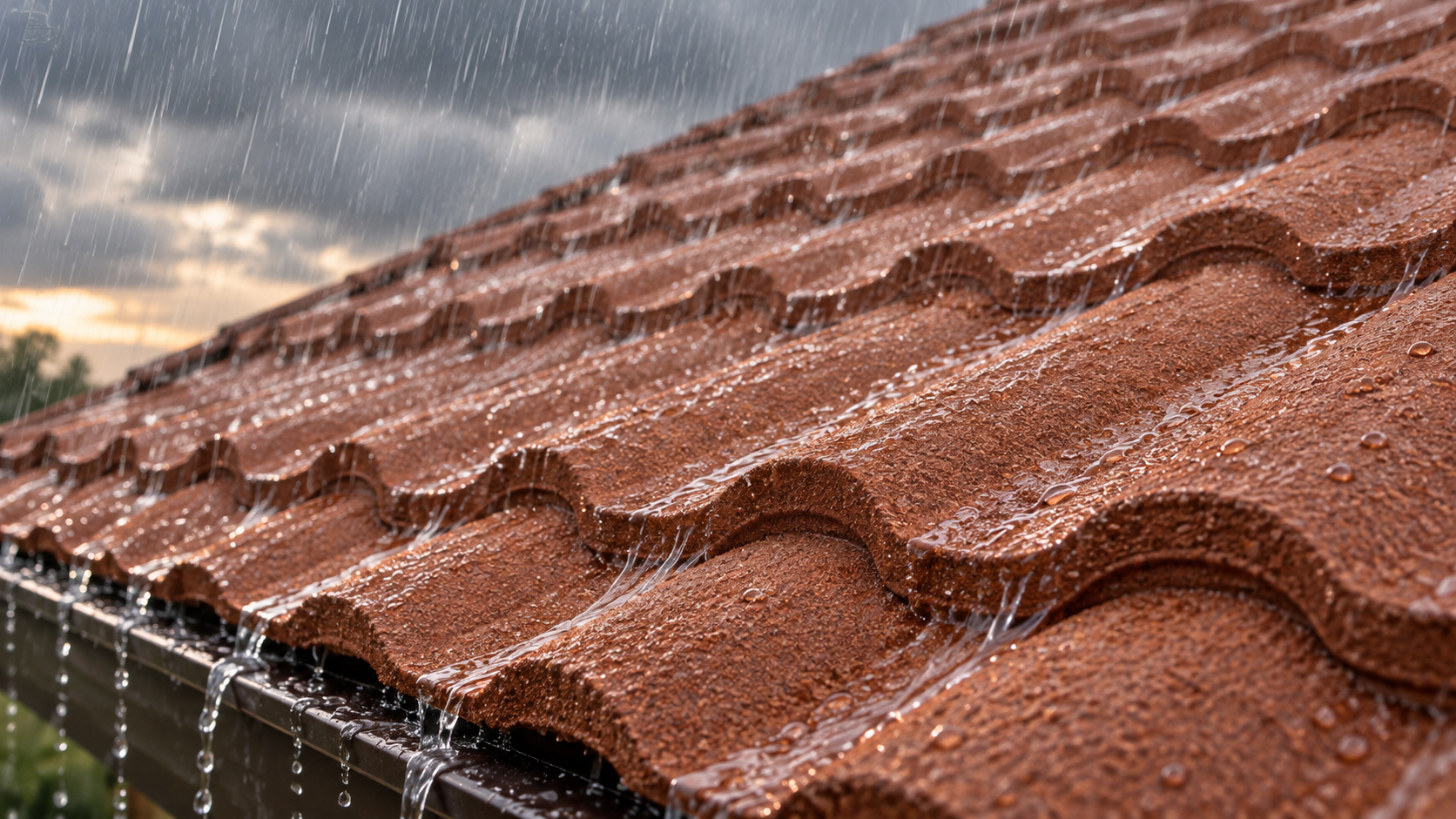
Are metal roofs noisy? They can be, but the answer depends much more on how the roof is built than on the metal itself. A bare metal panel installed over open framing can produce a noticeable sound during rain. That is very different from a modern residential roof built over solid decking with underlayment, attic space, insulation, and a finished ceiling.
For homeowners, the important question is how the complete roof assembly manages vibration before it reaches the rooms below.
Are Metal Roofs Noisy When It Rains?
Rain will usually be audible on any roofing material during a strong storm, and metal is no exception. However, the extreme drumming or “tin roof” sound many homeowners imagine is more commonly associated with exposed metal panels on barns, sheds, patios, and similar structures.
On a residential home, metal roof noise when it rains is affected by several layers between the exterior roof covering and the interior living space. Solid decking, underlayment, an attic or air space, insulation, and the ceiling all influence how much sound reaches the occupants.
So, are metal roofs loud when it rains? A properly designed residential metal roof may allow you to hear rainfall, especially during heavy weather, but it should not automatically behave like an exposed sheet of metal installed over an open structure.
Why Do Metal Roofs Have a Reputation for Being Loud?
The reputation largely comes from older agricultural and utility buildings.
Barns, warehouses, sheds, and open-frame structures often use metal panels installed directly over purlins or framing. There may be no solid plywood or OSB roof deck underneath, little or no insulation, and sometimes no finished ceiling separating the roof from the occupied space.
With fewer layers available to absorb vibration and sound, rain striking the metal can be much more noticeable.
The phrase “tin roof” has also become a general expression for noisy metal roofing. Modern residential systems, however, are more commonly made from materials such as steel or aluminum rather than actual tin, and their construction can be very different from a simple exposed-metal roof.
What Determines Metal Roof Noise?
A roof works as a complete system. The exterior material matters, but it is only one part of what determines the metal roof rain sound you hear indoors.
Solid Roof Decking
Residential roofs commonly include a solid structural deck made from plywood or OSB.
Unlike an exposed panel spanning open framing, metal installed as part of a system over solid decking has continuous support beneath it. That support can help limit panel vibration and changes the way sound travels through the roof assembly.
Underlayment and Attic Insulation
Roofing underlayment creates another layer between the metal roofing and the structural deck. Its primary purpose is not necessarily soundproofing, but the additional separation is part of the overall assembly that affects how vibration and sound are transmitted.
Below the roof deck, attic and ceiling insulation can further reduce the amount of exterior sound reaching occupied rooms.
Insulation requirements vary by home, climate, building design, and local code, so the appropriate configuration should be evaluated by a qualified professional.
Installation Quality
Ordinary rain noise and mechanical noise are not the same thing.
Panels, trims, flashing, and fasteners need to be installed correctly and according to the requirements of the selected roofing system. Metal also expands and contracts as temperatures change, so the roof assembly must account for normal thermal movement.
Rattling, banging, flapping, or repetitive localized noises may indicate that a component is loose or needs inspection rather than being a normal characteristic of rain on a metal roof.
Installation conditions should be evaluated by a qualified roofing contractor.
Metal Profile and Surface Finish
Roof profile, panel configuration, material, surface texture, attachment method, and the layers beneath the metal can all influence resonance.
A formed modular roofing panel does not behave in exactly the same way as a large, smooth sheet of exposed metal. At the same time, it would be misleading to attribute interior noise to panel thickness, coating, or surface finish alone.
The complete assembly still matters.
Are Metal Roofs Louder Than Shingles?
Homeowners often compare metal roof noise with asphalt shingles because shingles are generally considered a quiet roofing option.
When both roof types are installed as complete residential systems over solid decking and appropriate supporting layers, the difference may be much smaller than the comparison between an asphalt roof and an exposed metal panel would suggest.
An ATAS International technical note on sound emission from metal roofing, summarizing testing associated with the University of Luleå, reports a six-decibel difference between the metal and asphalt-shingle configurations evaluated in that study.
That figure should be understood within the specific test conditions. It does not mean every metal roof will measure six decibels differently from every asphalt roof, nor that every homeowner will perceive the difference in the same way.
For a broader comparison of the two materials, see Novatik’s guide to metal roof vs. asphalt shingles.
Does Stone-Coated Steel Reduce Rain Noise?
Stone-coated steel roofing differs considerably from the simple exposed metal sheet many people picture when they think of a noisy roof.
The material uses formed steel combined with a bonded, textured stone-granule surface. Novatik Nature stone-coated metal roofing, for example, is designed as a modular residential roofing system rather than as a bare sheet installed over open framing.
The textured surface and complete residential roof build-up can help avoid the traditional bare-metal or “tin roof” effect. However, it would not be accurate to describe stone-coated steel as soundproof or guarantee a specific indoor noise level based on the surface coating alone.
What homeowners hear during rainfall will still depend on factors such as roof decking, underlayment, insulation, attic configuration, installation quality, roof geometry, and the intensity of the rain.
Novatik also offers painted modular metal roofing. As with stone-coated steel, interior sound should be considered in the context of the complete roofing system rather than the exterior panel alone.
How to Reduce Rain Noise on a Metal Roof
If rain noise is an important consideration for your project, it is best to address it while planning the complete roof assembly rather than focusing on a single roofing component.
To understand how to reduce rain noise on a metal roof, discuss the following points with your roofing contractor:
- Confirm how the selected roofing system will be installed and whether a solid roof deck is required by the system, approved assembly, or local building code.
- Use underlayment that is compatible with the roofing product and the specific project requirements.
- Evaluate attic and ceiling insulation with an appropriate professional, particularly when rooms are located directly below the roof.
- Make sure panels, trims, flashing, and fasteners are properly secured according to the roofing system documentation.
- Have rattling, banging, or other unusual sounds inspected instead of simply trying to cover the noise from inside the house.
Some roofs are installed over existing shingles, and an additional existing layer may affect sound transmission. However, installing metal over shingles should not be treated as a universal noise-reduction strategy. The condition of the existing roof, building code, system approvals, structural requirements, and manufacturer instructions all need to be considered first.
When Metal Roof Noise May Indicate a Problem
A steady rain patter during a storm is different from repeated rattling, banging, scraping, or flapping.
Unusual localized metal roof noise problems may be associated with loose trim, flashing, fasteners, panels, debris, or another roof component. The sound itself is not enough to identify the exact cause, but a new or unusually loud mechanical noise is worth investigating.
Homeowners should contact a qualified roofing contractor for an inspection rather than attempting to diagnose or repair roofing components during wet or stormy conditions.
Choosing a Quiet Metal Roof for Your Home
A quiet metal roof is the result of the roofing material and the complete roof assembly working together. Modern residential metal roofing should not be judged solely by the loud rain on a tin roof, barn, or open-frame shed.
Novatik Nature and Novatik Metal provide modular steel roofing options for residential projects, while the final sound performance depends on the roof assembly, insulation, building design, and installation quality. The key is to compare complete residential roof systems—not metal panels in isolation.