

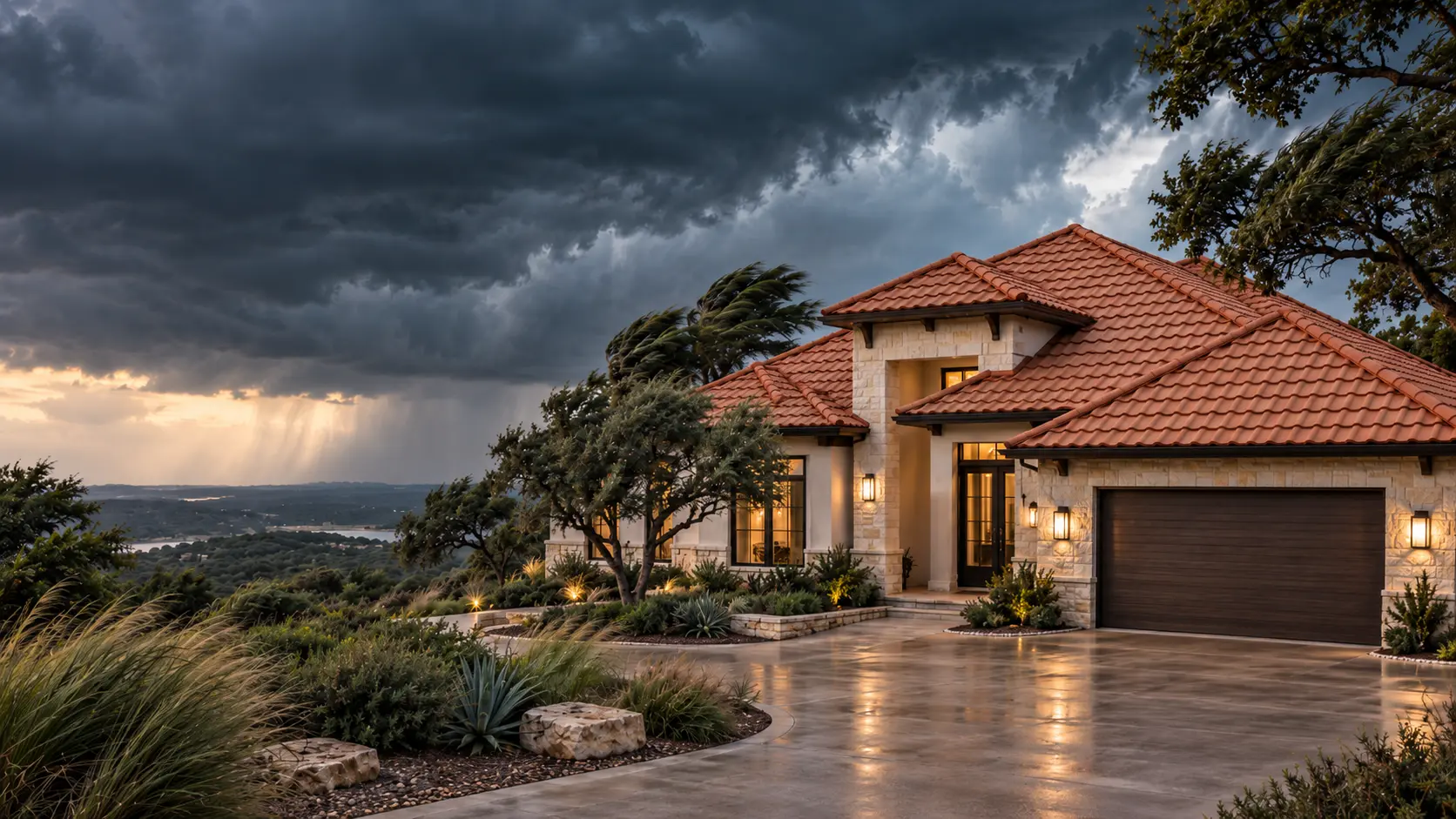
When a major storm bears down on your home, the roof is the component under the most stress. Choosing the best roof for hurricanes means looking well beyond the surface material — it means understanding how the entire roofing system holds together under extreme wind, water, and impact. No roof is truly "hurricane-proof," and any product marketed that way should be read with caution. But some systems perform dramatically better than others when it matters most. This is a year-round concern across the hurricane belt — Florida, the Gulf Coast, and the Atlantic Southeast — where salt air and heat shape the choice alongside wind (see our guide to roofing for Florida homes).
What Makes a Roof Hurricane-Resistant?
Hurricane resistance is never the result of a single feature. It comes from how every layer of the roof works as one system. The factors that matter most include:
- Roofing material — how the outer surface resists wind, uplift, and flying debris.
- Wind uplift resistance — the roof's ability to stay attached as negative pressure tries to peel it away.
- Roof deck — the structural sheathing the covering is fastened to; a weak deck undermines even the best material.
- Underlayment — the secondary water barrier that protects the home if the outer layer is breached.
- Fastening and attachment system — nails, clips, screws, or interlocking mechanisms that hold everything down.
- Roof shape and pitch — the geometry that determines how wind pressure is distributed.
- Installation quality — even a top-rated product fails if it is installed poorly.
The strongest assemblies reinforce each of these layers — ring-shank nails and tighter fastening patterns for deck attachment, a sealed or taped deck that acts as a secondary water barrier, and metal hurricane clips or straps tying the roof to the walls. The key takeaway: a hurricane-resistant roof is defined by the complete roofing system, not by the exterior material alone.
What Is the Best Roofing Material for Hurricanes?
Several materials are used in hurricane-prone regions, each with distinct strengths and trade-offs.
Metal Roofing
Metal roofing consistently performs well in high winds. Its low weight reduces structural load, and interlocking panels with concealed fasteners deliver strong wind uplift resistance. Many products also carry high impact resistance against flying debris. With long service life and coatings built for coastal exposure, metal is among the most suitable choices for hurricane-prone, salt-air areas.
Concrete and Clay Tile
Concrete and clay tile offer excellent durability and a long lifespan. Their significant weight can help resist uplift, but that same weight makes a correctly engineered fastening system essential. Under high-wind events, individual tiles can crack, lift, or shift out of place, and dislodged tiles then become debris that damages the rest of the roof. Performance depends heavily on proper attachment and installation.
Asphalt Shingles
Asphalt shingles remain the most affordable option, and products with enhanced wind and impact ratings are available for storm-prone regions. However, results depend strongly on installation quality — proper nailing patterns and sealing are critical. Shingles also tend to have a shorter lifespan than metal or tile, which is worth weighing over the long term.
Are Metal Roofs Good for Hurricanes and High Winds?
Beyond the material itself, metal's hurricane performance comes down to the system. Wind uplift resistance depends on the fastening design — concealed clips and interlocking panels distribute load and resist the negative pressure that peels roofs apart. Low weight eases structural demand, and corrosion-resistant coatings guard against coastal salt air. What separates a good metal roof from a great one is a tested, code-approved system installed by professionals.
This is where a manufacturer's testing matters. Novatik produces stone-coated steel (its Nature line) and painted modular metal systems engineered for high-wind and coastal conditions, available in profiles that replicate traditional looks — from a wood shake to a classic profile — so a storm-rated roof needn't sacrifice curb appeal. For qualifying systems, Novatik lists wind resistance up to 180 mph, a Class 4 impact rating, Class A fire resistance, and corrosion-resistant steel construction, when installed to specification. Certain Novatik assemblies also carry a Miami-Dade County Notice of Acceptance — one of the country's most stringent approvals — for use in the High-Velocity Hurricane Zone under the specifications tested, and select lines are backed by warranties of up to 60 years. Ratings and approvals should always be read together with the installation requirements, roof design, local code, and product documentation. Even so, no roofing system is immune to every storm.
Can a Roof Withstand a Category 5 Hurricane?
It's important to understand what a Category 5 rating actually describes. The Saffir-Simpson scale measures the intensity of a hurricane — it is not the same as a product's wind rating. A roofing system rated for a given wind speed has been tested under controlled conditions, while a real Category 5 storm combines several forces at once:
- Sustained wind speed versus much higher wind gusts, which can briefly exceed the average.
- Uplift forces concentrated at edges and corners.
- Flying debris capable of puncturing surfaces.
- Water intrusion driven by pressure into any weak point.
Because tested wind resistance is measured differently from how a specific storm behaves, even a high wind rating is not a guarantee that a roof will emerge from a particular Category 5 hurricane undamaged. A strong rating meaningfully improves the odds — it does not eliminate the risk.
Building Codes and Certifications to Look For
In high-wind regions, third-party approvals tell you more than marketing claims. In Florida, roofing must meet the Florida Building Code, and products used in the High-Velocity Hurricane Zone (Miami-Dade and Broward counties) face the strictest requirements in the country — verified through a Miami-Dade County Notice of Acceptance or a Florida Product Approval. Wind-uplift performance is measured by standardized tests such as ASTM D3161 and UL 1897, and the FORTIFIED program from the Insurance Institute for Business & Home Safety sets voluntary standards for sealed decks and reinforced connections that go beyond minimum code. For impact, look for a Class 4 rating. Whatever the label, confirm it applies to the full assembly as installed — not just the covering.
What Is the Best Roof Design for Hurricanes?
Material is only part of the equation. The shape and geometry of the roof significantly influence how it handles wind.
Best Roof Shape for High Winds
Hip roofs — sloping on all four sides — generally distribute wind pressure more evenly than gable roofs, which present a large flat vertical end that catches wind like a sail. That doesn't mean every hip roof beats every gable: a gable roof can also perform well when its ends, deck, overhangs, edges, and structural connections are properly designed. Roof edges, corners, eaves, and overhangs are where uplift forces concentrate most, so minimizing large overhangs and reinforcing these zones matters on any shape. This is why roof shape is one of the most important design factors for high-wind resistance.
Best Roof Pitch for Hurricanes
Roof pitch affects how wind pressure and uplift act on the surface: very low slopes and very steep slopes each interact with wind differently, and moderate pitches often strike a practical balance. There is no single "magic" pitch that automatically makes a roof hurricane-resistant. Shape, pitch, attachment method, and roofing material all have to be evaluated together as one system.
How Hurricanes Damage Roofs
Understanding the failure modes clarifies where protection matters most.
Wind Uplift
As wind flows over a roof, it creates negative pressure that lifts components upward — strongest at edges, corners, and ridges. If fasteners or the deck give way, sections of the covering can be torn off.
Wind-Driven Rain
High winds force rain sideways and under pressure, allowing water to penetrate through gaps, flashing, and any weak point in the roofing system — often causing interior damage even when the surface stays intact.
Flying Debris
Branches, loose building materials, and objects picked up by the wind become projectiles, and hurricanes moving inland can bring damaging hail as well. Impact damage can crack, puncture, or dislodge roofing materials, creating new points of failure — which is why impact resistance matters alongside wind resistance (see our guide to hail-resistant roofing and Class 4 ratings).
How to Improve Hurricane Roof Protection
Homeowners can meaningfully reduce risk with regular upkeep and preparation:
- Schedule regular roof inspections, especially before hurricane season.
- Repair loose or damaged roofing promptly.
- Check flashing and roof penetrations for gaps.
- Keep gutters and drainage clear so water moves off the roof.
- Trim nearby trees and branches that could become debris.
- Inspect vulnerable areas such as edges, corners, and ridges.
- Arrange a professional inspection to catch issues you might miss.
When replacing a roof, ask about more than the exterior material — the deck, underlayment, attachment system, tested wind performance, product approvals, and corrosion protection all shape how it will hold up.
These steps improve resilience — but they cannot make any roof completely hurricane-proof.
Choosing the Best Hurricane-Resistant Roof
The best hurricane-resistant roof is never one single thing. It is the combination of the right roofing material, a sound roof design, a robust attachment system, quality underlayment, a tested system, and correct professional installation. When those elements come together, metal roofing stands out as one of the strongest choices for high-wind and coastal regions — from Florida to high-wind states like Texas — and tested, code-approved systems like those from Novatik give homeowners a dependable foundation to build that protection on.