

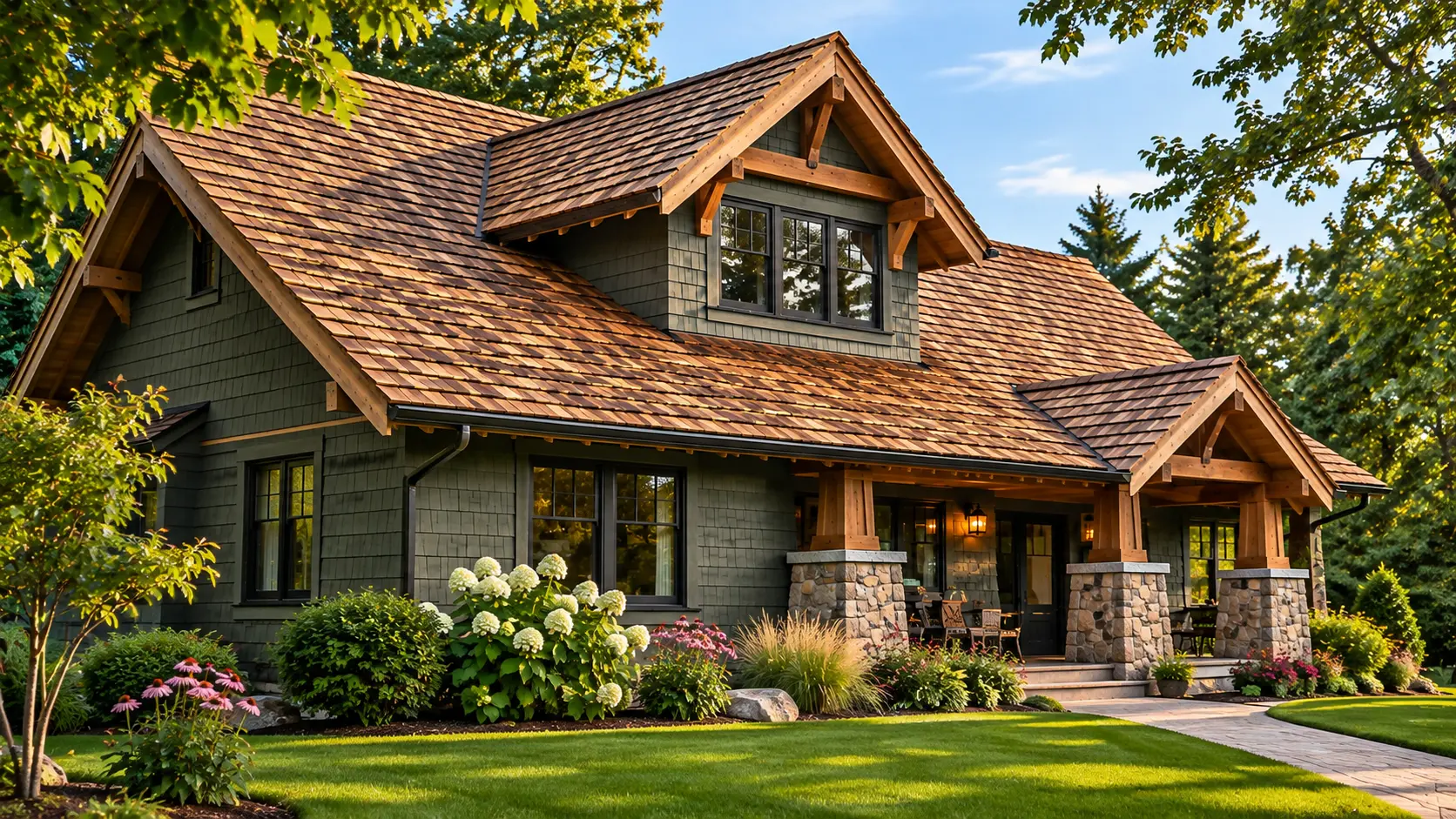
A wood shingle roof is made from thin, tapered pieces of natural wood installed in overlapping rows to protect a home from rain and other weather. Most often associated with cedar, wooden shingles have been used for generations on traditional homes and properties where natural materials are part of the design.
Their warm texture and distinctive grain make wood roofing appealing, but natural timber also needs regular care. Moisture, changing temperatures, and prolonged exposure to the elements affect both its appearance and durability.
Homeowners can now also choose metal roofing that recreates the look of traditional wood shingles. Understanding how wood roofing works, what affects its lifespan, and how it compares with modern metal alternatives can help you make a more informed decision.
What Are Wood Roof Shingles?
Wood roof shingles are individual pieces of timber cut into tapered sections and installed in overlapping courses, allowing rainwater to flow down the roof while protecting the underlying structure.
Unlike asphalt shingles, which combine several manufactured materials, wooden shingles are cut from natural timber. Each piece has its own grain, color variation, and surface character.
Wood shingles are commonly found on traditional houses, historic properties, and homes designed around natural materials, where they complement wood siding, stone facades, and organic textures.
As they age, their original warm brown or reddish tone usually shifts to a silver-gray finish. The rate of weathering depends on the wood species, sunlight, moisture, and surrounding environment.
Although wooden shingles provide a distinctive appearance, they must be installed correctly and maintained regularly to perform well over time.
Wood Shingles vs. Wood Shakes: What's the Difference?
Wood shingles and wood shakes are often mentioned together, but they differ in how they are manufactured and how they look once installed.
Wood shingles are typically machine-sawn on both sides, producing smooth surfaces and a relatively uniform appearance. Their consistent shape creates clean rooflines suited to traditional homes where a more refined finish is preferred.
Wood shakes are traditionally split from wood blocks, although many modern shakes are split and then resawn. This produces a thicker, more irregular surface with pronounced grain patterns and deeper shadow lines.
As a general guide, wood shingles may last around 20–30 years, while thicker wood shakes can last 30–40 years under suitable conditions. However, these ranges vary significantly with material quality, climate, installation, and maintenance.
Both materials can be made from similar wood species, but thickness alone does not determine durability. The quality of the wood, roof design, and maintenance practices all influence long-term performance.
What Types of Wood Are Used for Roofing?
Not every type of wood is suitable for roofing. Timber used for wooden shingles must withstand repeated exposure to moisture, sunlight, temperature changes, and biological deterioration.
Several species have traditionally been used for roofing applications:
- Western red cedar: One of the most widely recognized roofing woods, valued for its natural decay resistance, relatively low weight, and distinctive grain.
- Alaskan yellow cedar: Known for its durability, fine texture, and resistance to deterioration.
- Redwood: Historically used in certain regions because of its natural decay resistance and dimensional stability.
- Cypress: Used in some regional roofing applications, particularly where it has traditionally been available as a local building material.
Western red cedar remains especially associated with wooden shingle and shake roofing in North America.
However, the wood species is only one part of the equation. Product grade, grain orientation, installation quality, and maintenance all affect long-term performance.
Higher-quality roofing shingles generally provide more consistent results than lower-grade products containing defects or less durable wood.
For additional information about cedar roofing materials and maintenance, homeowners can consult the Cedar Shake & Shingle Bureau.
Advantages and Disadvantages of Wood Shingle Roofing
Wooden shingles offer an appearance that many homeowners find difficult to replicate with conventional roofing materials. However, natural wood also introduces maintenance, cost, and safety considerations that should be understood before installation.
Benefits of Wood Shingles
The primary advantage of wooden shingles is their natural appearance. Variations in grain, color, and texture create subtle differences across the roof.
Other benefits include:
- Natural character: Each shingle has a distinctive grain pattern and texture.
- Architectural appeal: Wood roofing complements traditional, Craftsman-style, cottage, and rustic home designs.
- Natural weathering: Cedar and similar species can develop an attractive silver-gray patina.
- Renewable material: Responsibly sourced wood is renewable, although its overall environmental impact depends on production, treatment, maintenance, and replacement.
For historic renovations and homes where authentic materials are important, natural wood shingles may be an appropriate architectural choice.
Drawbacks of Wood Shingles
The main disadvantage of wooden roofing is its sensitivity to prolonged moisture exposure.
Wood absorbs water, and repeated wetting and drying cycles can cause shingles to crack, curl, or split. Poor drainage, accumulated leaves, and shaded roof areas can encourage moss, algae, and fungal growth.
Regular inspections and maintenance are therefore important. Damaged shingles should be replaced promptly, and debris should be removed to allow the roof to dry properly.
Fire safety is another consideration. Untreated wooden shingles are combustible, although approved fire-retardant treatments and tested roofing assemblies can improve their fire performance.
Some jurisdictions restrict combustible roof coverings, particularly in areas exposed to wildfire hazards. Homeowners should always review local building requirements before selecting natural wood roofing.
For a closer look at roofing fire classifications, read our guide to fire-resistant roofing and Class A fire-rated roofs.
Wood roofing can also involve higher initial and ongoing costs than some conventional materials. Pricing varies with the wood species, grade, roof complexity, location, and installation requirements.
How Long Does a Wood Shingle Roof Last?
The lifespan of a wood shingle roof depends on material quality, installation, local climate, and maintenance.
The Cedar Shake & Shingle Bureau provides an approximate average lifespan of 30–40 years for cedar shake and shingle roofs. However, this is a general industry estimate rather than a guarantee for every roof.
Several factors influence longevity:
- Wood quality: Durable, properly graded timber generally performs better than lower-grade materials.
- Climate: Persistent humidity and frequent rainfall increase the risk of moisture-related deterioration.
- Roof design: Proper drainage, ventilation, and installation help prevent moisture accumulation.
- Maintenance: Regular inspections and timely repairs can extend the useful life of the roof.
In humid regions, including parts of Florida, wood roofing may require additional attention to moisture management.
Homeowners should also consider how the roof will age visually. Natural timber changes color over time, and sections exposed to different levels of sunlight and moisture may weather unevenly.
A well-maintained wood roof can provide decades of service, but its condition should be assessed periodically by a qualified roofing professional.
Wood Shingles vs. Metal Roofing: Which Is Better?
Natural wood and metal roofing can create similar architectural appearances, but the materials behave differently when exposed to moisture, sunlight, wind, and temperature changes.
Traditional wooden shingles provide authentic grain and natural weathering. Modern metal roofing can reproduce the layered shape and shadow lines of wood shakes using formed steel panels.
Stone-coated steel and painted modular metal roofing are two options for homeowners who appreciate the appearance of cedar but want a roofing system with different maintenance characteristics.
The main differences are outlined below.
For homeowners who prioritize authentic natural materials, wood roofing retains a distinctive appeal.
However, metal roofing can offer practical advantages where moisture exposure, maintenance requirements, and long-term durability are important considerations.
Unlike timber, steel does not rot, split from moisture-related movement, or attract wood-damaging insects. Metal roofing systems can also be engineered and tested for demanding weather conditions.
Fire performance is another consideration. Steel itself is noncombustible, but the fire classification of a roof depends on the complete tested assembly, including underlayment and supporting components.
Metal roofing is not automatically the better choice for every property. Budget, architectural requirements, local codes, and the specifications of the selected roofing system should all influence the decision.
For another material comparison, read our guide to metal roof vs. asphalt shingles.
You can also explore our guide to lightweight roofing materials to understand how different roofing systems compare by weight.
Metal Roofing That Looks Like Wood: Two Novatik Options
Homeowners who appreciate the appearance of traditional wooden shingles do not necessarily need to use natural timber to achieve a similar architectural style.
Modern steel roofing panels can recreate the overlapping pattern, dimensional shape, and textured appearance associated with wood shake roofing.
Novatik offers its wood-inspired profile in two roofing collections: Novatik Nature Wood, featuring a natural stone-coated finish, and Novatik Metal Wood, featuring painted modular steel.
Both systems provide a wood-inspired appearance while avoiding the rot, splitting, and moisture absorption associated with natural timber.
The main difference between them lies in their surface finishes, construction, and visual character.
Novatik Nature Wood — Stone-Coated Steel Roofing
Novatik Nature Wood combines a wood-shake-inspired profile with a textured natural stone finish.
The roofing panels are manufactured from steel protected by a zinc-magnesium (ZnMg) alloy coating and additional corrosion-protection layers. Natural volcanic stone chips create a textured surface that reproduces the matte appearance and visual depth of traditional cedar shakes.
The result is a roofing profile that complements rustic homes, cottages, Craftsman-style houses, and other architectural designs where the appearance of wood is important.
Unlike natural timber, the underlying steel does not rot or split because of moisture absorption.
According to Novatik's published product specifications, Nature Wood offers Class A fire performance and Class 4 impact resistance, subject to the applicable tested configurations, product approvals, and installation requirements.
The product is backed by a 60-year technical warranty and a 30-year aesthetic warranty, subject to the manufacturer's terms and conditions. These warranty periods should not be interpreted as guaranteed service life.
For homeowners who prefer the textured appearance of traditional cedar roofing, Nature Wood offers a way to achieve a similar look using modern stone-coated steel roofing.
Novatik Metal Wood — Painted Modular Steel Roofing
Novatik Metal Wood offers a wood-inspired roofing design using painted modular steel panels.
Unlike Nature Wood, which features natural stone chips, Metal Wood uses a multilayer protective paint system applied to formed steel.
Its pressed profile recreates the appearance of overlapping wooden roofing while providing a more uniform painted surface.
The modular steel design offers an alternative to traditional timber roofing, combining a wood-inspired appearance with resistance to rot and reduced maintenance requirements compared with natural wood.
Metal Wood is available in four colors: Dark Brown, Brown, Grey, and Black. These finishes allow homeowners to select a wood-inspired appearance that complements traditional or contemporary architecture.
According to Novatik's published specifications, Metal Wood carries a 30-year technical warranty and a 20-year aesthetic warranty, subject to the manufacturer's terms.
For homeowners and builders who prefer a painted finish rather than a textured stone surface, Metal Wood provides another option within Novatik's painted modular metal roofing collection.
Both Nature Wood and Metal Wood recreate the visual character of wooden roofing using steel, but they offer different finishes and design possibilities.
Choosing between them depends on the desired texture, color, architectural style, budget, and technical requirements of the project.
Novatik manufactures and supplies roofing materials rather than performing installations. Homeowners, contractors, and builders can review the available technical documentation, compare product finishes, and request samples before selecting a roofing system.