

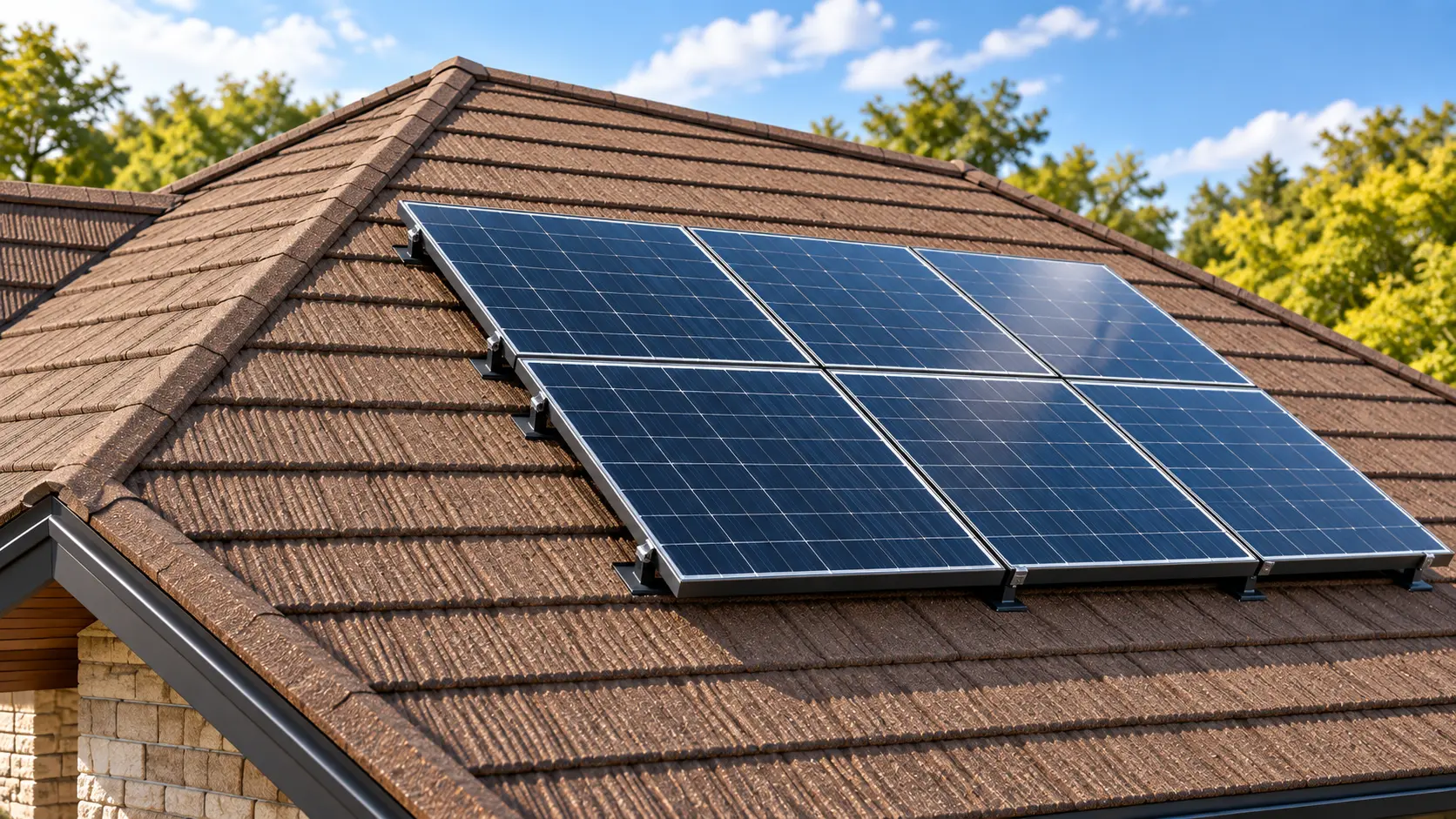
Yes, you can install solar panels on a metal roof. The right installation method depends on the roof profile and mounting system. These factors affect how securely the solar array is attached and how well the roofing continues to protect the building from water.
This guide explains how solar panels are installed on different types of metal roofs, what problems can occur, and what homeowners should check before starting a project.
Can Solar Panels Be Installed on a Metal Roof?
In most cases, yes. Solar systems can be installed on many common types of metal roofing systems, including standing seam roofs, exposed-fastener panels, corrugated metal sheets, and stone-coated or modular metal tiles.
Each roof profile requires a suitable attachment method. The mounting hardware should be selected for the roofing system rather than adapting components intended for a different roof type.
A roof is not automatically ready for solar simply because it is made of metal. Before installing solar panels on a metal roof, a contractor should evaluate the condition of the roofing, its remaining service life, the supporting structure, and applicable local wind-load requirements.
Why Metal Roofs Work Well With Solar Panels
A metal roof with solar panels can be a practical long-term combination for several reasons.
- Durability. A properly installed metal roof can provide a long service life, depending on the roofing system, protective coating, climate, installation quality, and maintenance.
- Compatible service life. Solar panels commonly come with long-term performance warranties. A durable roof may reduce the likelihood that the solar array will need to be removed early for roof replacement.
- Relatively low weight. Metal roofing is generally lighter than many concrete and clay tile systems. Structural capacity, however, still needs to be assessed for each project.
- Multiple mounting options. Mounting solutions are available for several types of metal roofing when the hardware is compatible with the specific profile.
The main advantage is not simply that the roof is made of metal. The roofing and solar mounting system need to work together as part of the same installation.
How Are Solar Panels Installed on a Metal Roof?
The installation method depends primarily on the roof profile. A mounting system designed for one type of metal roofing may not be suitable for another.
Standing Seam Metal Roofs
Standing seam roofs have raised seams running between the eaves and ridge. Specialized clamps can often grip these seams and support solar racking without penetrating the roofing panels.
This can reduce the need for penetrations through the roof surface. The clamps still need to match the seam shape and roofing material, while their placement and spacing must meet structural and local wind-uplift requirements.
Exposed-Fastener Metal Roofs
Exposed-fastener roofs are secured through the panels to the structure underneath. Installing solar equipment on these roofs generally requires carefully planned attachment points.
Where penetrations are required, proper flashing, sealing, fastener selection, and placement are particularly important. The installer should be able to explain where the mounts will be positioned, what they will connect to beneath the panels, and how the attachment points will remain watertight.
Stone-Coated and Modular Metal Roofs
Stone-coated and modular metal panels have shaped profiles and overlapping sections. Solar mounting hardware needs to fit the specific roof design without crushing panels, interfering with overlaps, or restricting drainage.
Depending on the roofing system, installers may use profile-specific brackets or other mounting components designed for that particular panel shape.
Hardware intended for another roofing type should not simply be adapted without confirming compatibility. The contractor should identify a mounting solution suitable for the specific profile before work begins.
Can Solar Panels Damage a Metal Roof?
Properly installed solar panels should not damage a metal roof. Problems are more commonly related to poor workmanship, incompatible components, or a mounting system that does not match the roofing profile.
Potential risks include:
- Improper penetrations. Poorly sealed or incorrectly flashed attachment points may allow water into the roof assembly.
- Damaged protective coatings. Scraping, careless foot traffic, or overtightened fasteners may damage the protective surface.
- Incorrect loading. Poorly positioned mounting hardware can deform panels or transfer loads to unsuitable parts of the structure.
- Incompatible materials. Certain combinations of metals may contribute to galvanic corrosion when moisture is present.
- Blocked drainage. Incorrectly positioned brackets, rails, or cables can interfere with normal water flow.
These risks can usually be reduced by planning attachment points in advance and using components designed for the roofing system.
Can Solar Panels Cause a Metal Roof to Leak?
Solar panels themselves do not normally cause a metal roof to leak. Problems are more likely when penetrations, flashing, fasteners, or other waterproofing details are handled incorrectly.
The installation method makes a difference. Standing seam systems can often minimize penetrations through the panels, while other profiles may require attachment points that need to be carefully sealed.
Where penetrations are necessary, the installer should use flashing and sealing methods suitable for the roofing system. It is also worth confirming who is responsible if a leak later develops around a solar mounting point.
Should You Replace the Roof Before Installing Solar Panels?
Replacing the roof first may make sense if it is approaching the end of its useful service life or already needs substantial repairs.
Removing and reinstalling a solar array later creates additional work and requires the modules, wiring, and mounting equipment to be handled again. Evaluating the roof before solar installation can help avoid that situation.
The inspection should look for corrosion, coating damage, existing leaks, deteriorated fasteners, damaged seams or panels, and problems with the supporting structure.
If significant roof work is likely in the near future, completing it before the solar installation is usually the more practical approach. A roof that remains in good condition may only require routine maintenance and a clear plan for the location of the solar array.
Are Stone-Coated Metal Roofs Suitable for Solar Panels?
Yes. Stone-coated metal roofs can accommodate solar panels when the mounting system is compatible with the specific panel profile.
These roofing systems use a steel core with protective layers and a stone-granule finish. Their shaped, overlapping panels require more attention to mounting locations than a flat roofing surface.
The installer should confirm that the mounting hardware fits the profile, does not interfere with panel overlaps or drainage, and follows the roofing manufacturer's installation and warranty requirements.
Homeowners considering this type of roof can learn more about Novatik stone-coated metal roofing, including the available profiles and construction of the roofing system.
What to Check Before Installing Solar Panels on a Metal Roof
Before choosing an installer or approving a mounting proposal, check:
- Roof condition: Look for leaks, corrosion, coating damage, loose fasteners, or other existing problems.
- Roofing profile: Identify the exact panel type and profile.
- Mounting compatibility: Confirm that the mounting hardware is suitable for that roofing system.
- Structural capacity: Verify that the structure can support the solar array and applicable environmental loads.
- Flashing and sealing: Ask how required penetrations and attachment points will be protected from water.
- Warranty requirements: Confirm that the proposed work complies with applicable roofing and solar warranty conditions.
- Installer experience: Look for experience working with the same or a similar type of metal roofing.
- Local requirements: Confirm that the project accounts for applicable permits, inspections, and wind-load standards.
A clear mounting plan before installation can prevent many problems later.
Metal Roof and Solar Panels: A Good Long-Term Combination?
Metal roofing and solar panels can work well together when the roof condition, mounting system, and installation details are considered from the beginning.
The mounting hardware should match the roofing profile, penetrations should be minimized where practical, and any required attachment points need to be properly protected from water intrusion.
If you are choosing a new metal roof and may install solar panels in the future, consider solar mounting compatibility when selecting the roof profile. For an existing roof, have its condition evaluated before the solar installation begins.